
Introduction
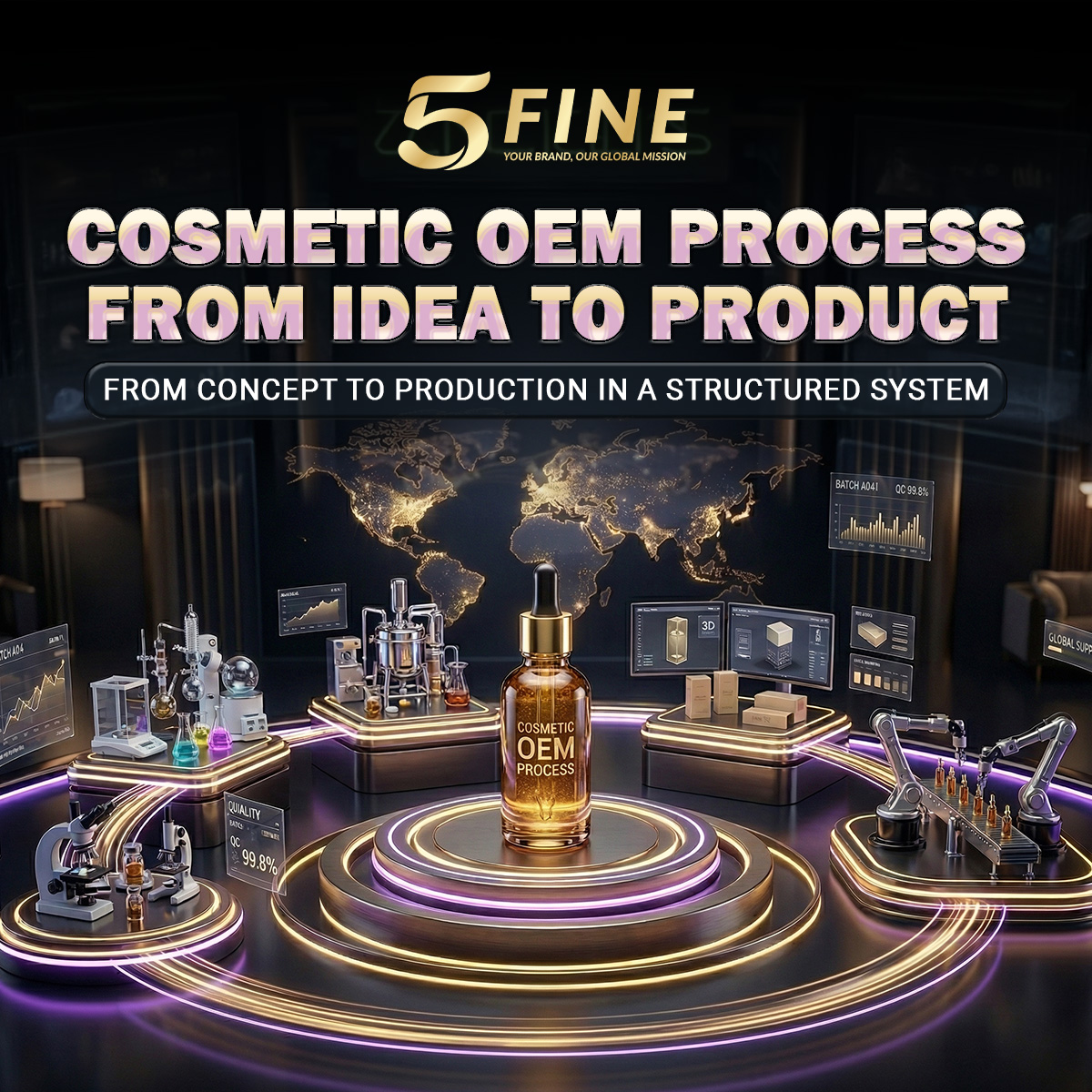
Bringing a cosmetic product to market is not simply about creating a formula or choosing a packaging design. It is a structured process that involves multiple stages, from idea development to final production.
For many brands, especially startups or growing businesses, understanding how this process works is essential to avoid delays, control costs, and ensure product quality.
In the cosmetic industry, this structured workflow is known as the OEM (Original Equipment Manufacturing) process — a system that connects formulation, packaging, manufacturing, and supply chain into one coordinated flow.
From Idea to Product Concept
Every cosmetic product starts with an idea, but a successful product requires more than inspiration.
At this stage, brands need to define:
-
Product type (serum, cream, cleanser…)
-
Target audience
-
Product positioning (mass, mid-range, premium)
-
Expected performance and key benefits
A clear concept helps guide the entire development process and reduces unnecessary revisions later.
Formulation Development & Sample Testing
Once the concept is defined, the next step is formulation.
This stage includes:
-
Selecting active ingredients and base components
-
Developing initial formulas
-
Testing texture, absorption, and performance
-
Creating multiple sample versions
Formulation is often an iterative process. Adjustments are made until the product meets both performance expectations and cost targets.
Packaging Development & Compatibility
Packaging is not just about design — it directly affects product stability and user experience.
Key considerations include:
-
Packaging type (jar, pump, dropper, airless…)
-
Material compatibility with formulation
-
Branding and visual positioning
-
Functional usability
A well-matched packaging solution ensures product protection while enhancing brand value.
Manufacturing & Production Planning
After finalizing formulation and packaging, the product moves into production.
This stage involves:
-
Selecting the appropriate manufacturing partner
-
Planning production quantities (MOQ)
-
Coordinating timelines
-
Managing filling and assembly processes
Efficient production depends on how well the previous stages were prepared.
Quality Control & Final Verification
Before products are ready for market, they must go through final checks.
This includes:
-
Product consistency verification
-
Packaging inspection
-
Batch control and production review
Quality control ensures that the final product meets both internal standards and market expectations.
The Role of 5FINE in the OEM Process
At 5FINE, we do not operate a single factory. Instead, we connect brands with a network of manufacturing partners across multiple countries.
Our role is to coordinate the entire OEM process:
-
Matching brands with suitable factories
-
Supporting formulation development
-
Aligning packaging and production
-
Managing supply chain coordination
By acting as a bridge between brands and production resources, we simplify the process and help brands move from idea to product more efficiently.
Why a Structured OEM Process Matters
Without a clear process, brands often face:
-
Delays in product development
-
Increased costs due to revisions
-
Inconsistent product quality
A structured OEM workflow helps reduce risks and ensures smoother execution.
Conclusion
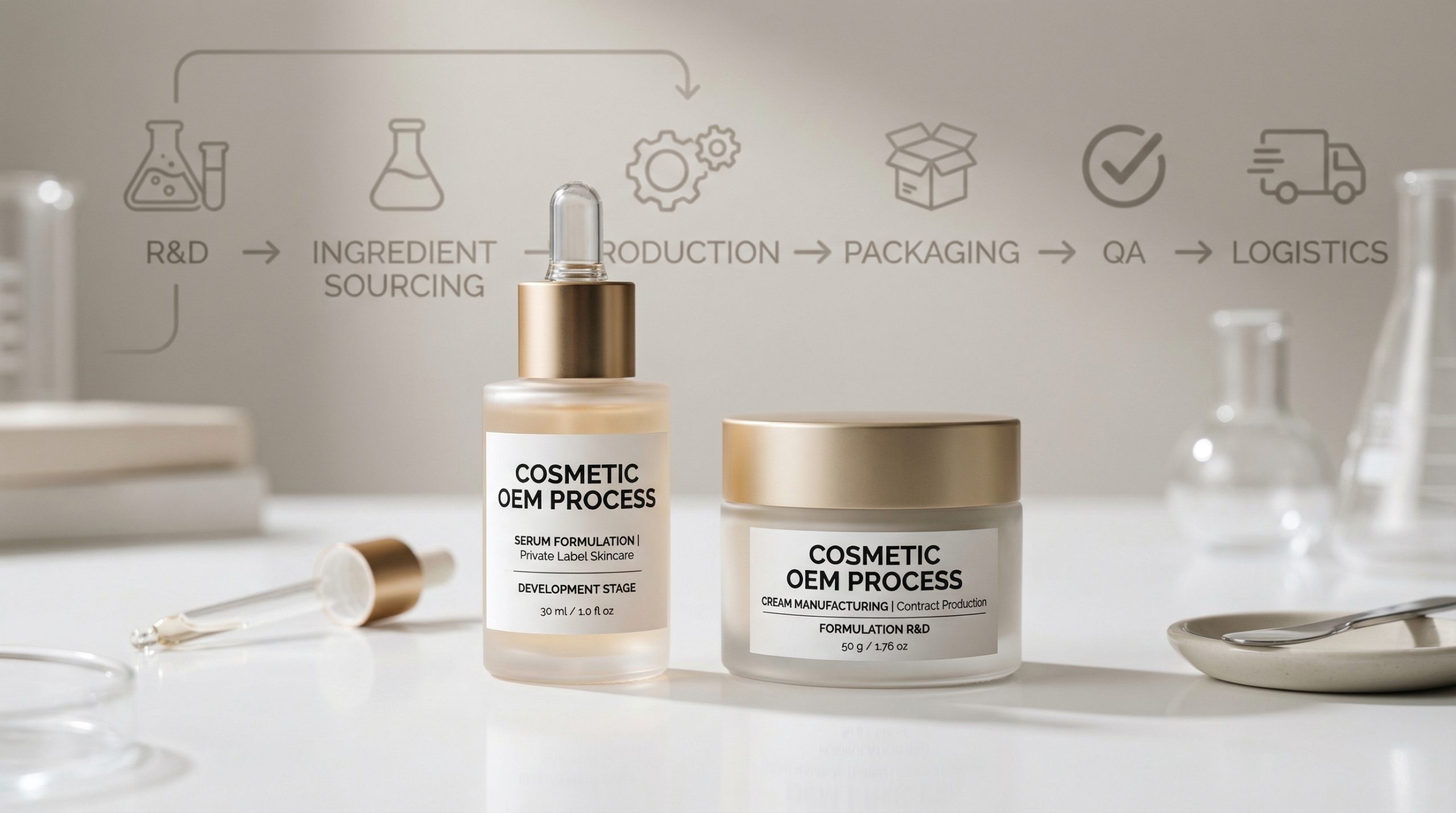
The cosmetic OEM process is a connected system where each stage influences the next.
From idea to final product, success depends on how well formulation, packaging, manufacturing, and supply chain are aligned.
With the right structure and the right partners, brands can bring products to market faster, more efficiently, and with greater confidence.
