
The global skincare industry is rapidly evolving beyond traditional beauty products.
A new category is gaining massive traction worldwide: dermocosmetics.
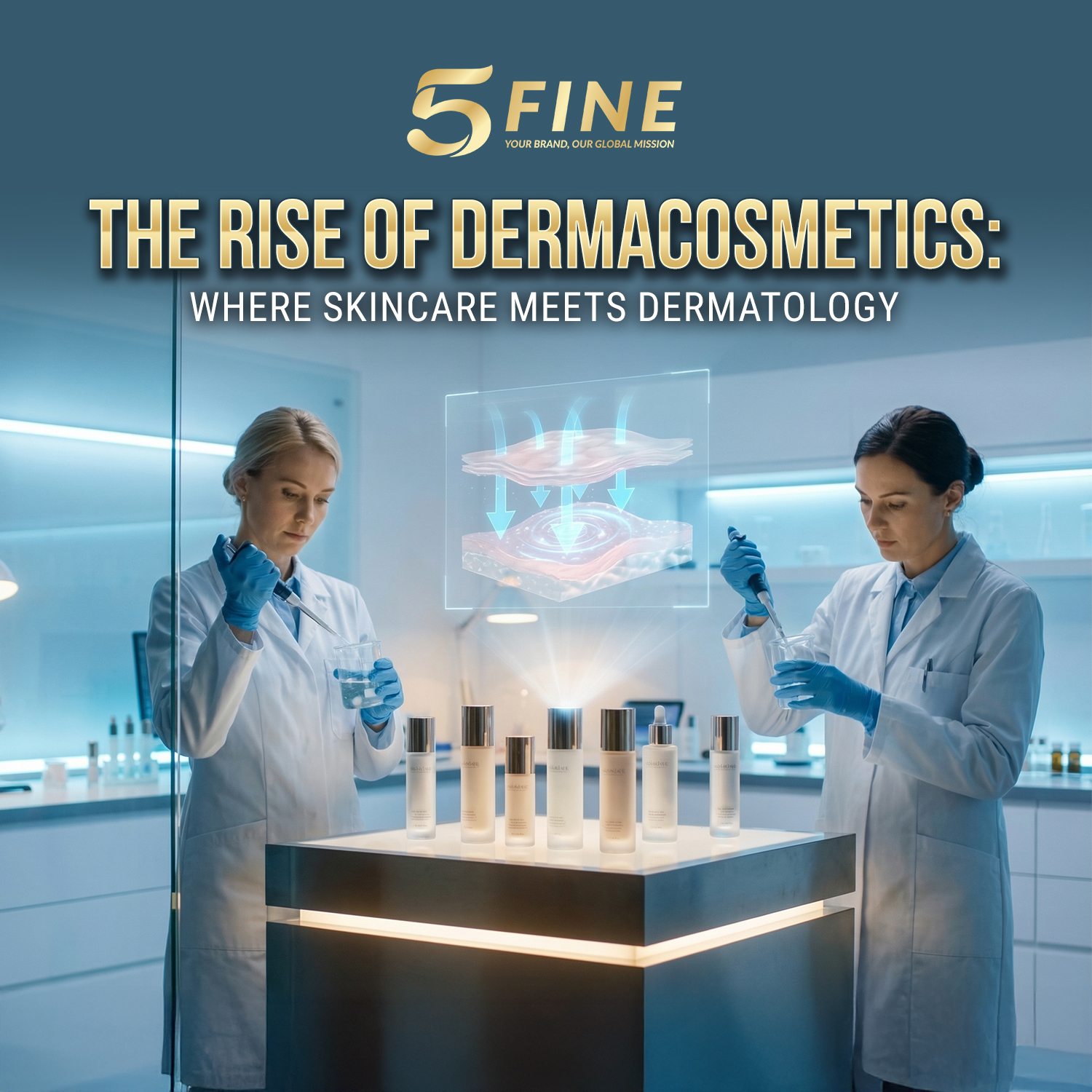
Dermocosmetics sit at the intersection of cosmetics and dermatology, offering skincare products designed with clinically proven ingredients and scientifically validated formulations.
Consumers today are no longer satisfied with marketing claims alone — they expect visible results backed by science.
This shift is redefining how skincare brands develop and manufacture their products.
Why Dermocosmetics Are Booming
Several major trends are driving the rise of dermocosmetic skincare.
1. Consumers Trust Science-Based Skincare
Modern consumers are becoming more educated about skincare ingredients.
They actively look for products containing scientifically proven actives such as:
• Retinol
• Niacinamide
• Hyaluronic Acid
• Peptides
• Ceramides
• AHA / BHA exfoliating acids
Instead of beauty marketing, brands are now highlighting clinical performance and ingredient transparency.
2. Dermatologist-Endorsed Skincare Is Growing
Dermatologist-backed skincare brands are experiencing strong global demand.
Consumers are increasingly trusting brands that position themselves closer to medical-grade skincare, particularly for concerns such as:
• acne treatment
• pigmentation
• anti-aging
• skin barrier repair
• sensitive skin care
This has created a rapidly expanding dermocosmetic segment within the beauty market.
3. Functional Skincare Is Becoming the New Standard
Skincare is shifting from purely cosmetic benefits to functional skin health solutions.
Products are now formulated to support:
• skin barrier repair
• microbiome balance
• inflammation control
• long-term skin health
This scientific positioning is pushing brands to work closely with advanced cosmetic R&D laboratories and OEM manufacturers.
How OEM Manufacturers Are Supporting Dermocosmetics
Producing dermocosmetic products requires higher technical standards than traditional beauty formulations.
OEM manufacturers specializing in dermocosmetics often provide:
Advanced Ingredient Research
Access to clinically studied ingredients and pharmaceutical-grade actives.
Stability and Safety Testing
Rigorous testing ensures product safety, stability, and efficacy.
Dermatological Positioning
Formulations designed to meet regulatory standards in multiple international markets.
High-Performance Formulations
Products developed with targeted performance claims supported by ingredient science.
The Opportunity for Skincare Brands
Dermocosmetics are creating enormous opportunities for both emerging and established brands.
New brands can differentiate themselves by offering science-driven skincare solutions rather than generic cosmetic products.
Popular dermocosmetic categories include:
• acne treatment serums
• barrier repair creams
• pigmentation correction products
• anti-aging functional serums
• sensitive skin skincare systems
With the right OEM partners, brands can bring clinically positioned skincare products to market faster than ever before.
The Future of Dermocosmetic Manufacturing
The next decade will likely see dermocosmetics become a dominant segment within the beauty industry.
Future developments may include:
• biotechnology-based skincare ingredients
• microbiome-focused formulations
• medical-grade cosmetic actives
• clinically validated skincare claims
• personalized dermatological skincare systems
Brands that embrace science-driven skincare will have a strong competitive advantage in the global beauty market.
How 5FINE Supports Dermocosmetic Brand Development
At 5FINE, we help cosmetic brands connect with advanced OEM manufacturers specializing in functional skincare and dermocosmetic development.
Our global manufacturing network includes partners across Korea, Japan, Thailand, China, and Vietnam, allowing brands to access cutting-edge formulation expertise and scalable production.
From concept development to international manufacturing, 5FINE supports brands in building high-performance skincare products designed for modern consumers.
