Best Packaging for a New Perfume Brand: Bottles, Caps & Boxes
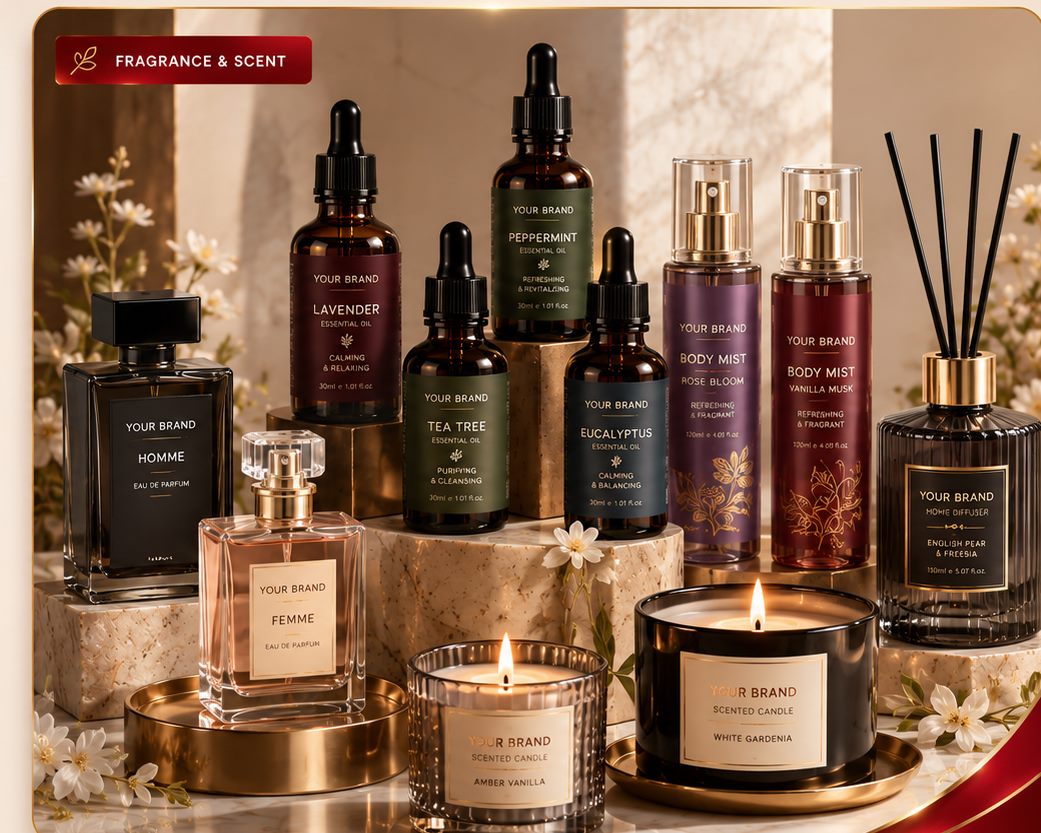
In fragrance, the bottle is half the product. Shoppers decide in seconds whether a perfume feels luxurious, and most of that judgement happens before the cap comes off. This guide walks new perfume brands through the packaging choices that matter — bottle, cap, pump, box and finishing — and explains what drives minimums and cost at each step.
Start from positioning, not from a bottle catalogue
Before you look at a single bottle, decide three things: your price tier (mass, masstige or niche luxury), your channel (online, department store, boutique, Gulf retail) and your scent story (floral, oud, fresh, gourmand). A 50 ml rectangular flacon with a heavy magnetic cap sends a very different message from a 10 ml roll-on or a 30 ml travel spray. Every packaging decision below should answer to those three choices. If you are still at the concept stage, read our founder's guide to fragrance OEM first.
1. The bottle: glass, shape, size
- Glass quality: standard flint glass is the budget option; "super flint" (extra-clear, heavier base) gives the premium look and feel. Thick bases photograph beautifully.
- Shape: rectangular or square with sharp shoulders reads modern and unisex; cylindrical reads classic; asymmetric or faceted shapes read niche. Stock shapes cost far less than a private mould, which adds a one-time tooling cost and much higher minimums.
- Size: 50 ml is a widely used size for an EDP hero; 100 ml suits Gulf and travel-retail shoppers who expect generous sizes; 30 ml works as a first entry; 10 ml roll-ons or travel sprays make good discovery products.
- Decoration: spray coating (matte, gradient, metallic), frosting, silk-screen printing, hot stamping and labels — each adds cost per piece and often its own minimum.
2. The cap: where "luxury" is felt
Caps are the most tactile part of the pack. Options range from lightweight ABS plastic (economical, many colours) to zamac metal (heavy, cool to the touch — a classic luxury signal) to wood or marble-effect resin for niche positioning. Magnetic caps add a satisfying click that customers associate with premium houses. A rule of thumb: if your budget only allows one upgrade, put it in the cap.
3. Pump and collar
Choose a crimp pump for a permanent, premium finish (common for EDP) or a screw pump for refillable and travel formats. The collar (the metal ring) can be polished silver, gold, gunmetal or matched to the cap; it is an inexpensive way to tie the look together. Ask for spray-pattern samples — a fine, even mist is a quality signal customers notice immediately.
4. The box: rigid, folding or magnetic
- Folding carton (printed board, often with foil and embossing): the cost-effective standard for masstige and online brands.
- Rigid box with an insert holding the bottle: the luxury default; adds weight and protects glass in shipping.
- Magnetic-closure or drawer box: excellent for gift sets and Gulf retail, where gifting is an important buying occasion.
- Inserts: EVA foam, moulded pulp or satin-lined board — choose by price tier and sustainability story.
Remember that cartons generally must carry the ingredient list (INCI), volume, batch code, country of origin, and any required warning symbols and importer details for each market; Arabic labelling is common for the GCC. Confirm the exact requirements with your importer.
5. Finishing touches that lift perceived value
Hot-foil logos, embossed or debossed brand marks, soft-touch lamination, a printed tissue wrap, a numbered card or a scent-description leaflet — each is inexpensive on its own, and together they make unboxing feel special. Keep the design system consistent across bottle, cap, collar and box: one metal tone, one typeface family, one accent colour.
6. Packaging for different markets
- GCC / Middle East: larger sizes, ornate caps, gold tones, gift sets, oud and amber positioning; Arabic labels.
- Southeast Asia: lighter, fresher styles, 30–50 ml, roll-ons and body mists for daily use; strong online unboxing appeal.
- Europe / US: minimalist glass, recycled or refillable stories, and sustainability claims that are specific and documented.
What drives minimums and cost
Every component has its own supplier, minimum and price logic. This table shows where the money goes, so you can decide where to save and where to invest.
| Component | Options | What drives it | Cost impact |
|---|---|---|---|
| Glass bottle | Stock flint, super flint, custom mould | Glass quality, weight, private mould | Stock lower; super flint medium; custom mould higher (tooling) |
| Cap | ABS, zamac, wood or resin, magnetic | Material, weight, magnet mechanism | ABS lower; zamac and wood medium to higher |
| Pump & collar | Crimp or screw; collar finish | Mechanism, metal finish | Lower to medium |
| Folding carton | Printed board with foil or embossing | Number of print effects | Lower to medium |
| Rigid box | With insert, magnetic or drawer | Construction, insert material | Higher |
| Decoration | Coating, frosting, printing, hot stamping | Number of effects and extra runs | Adds per piece, sometimes with its own minimum |
The fragrance concentrate, the oil concentration (EDT, EDP or extrait) and filling add to the packaging cost. Stock components keep minimums low; custom moulds and bespoke caps are usually a second-stage investment once the scent has proven itself. Minimums depend on the product and packaging and are confirmed in your quotation.
How to brief a partner on packaging
- Share three to five reference bottles you love (and why), plus your price tier and market.
- State size, concentration (EDT, EDP or extrait) and whether you want crimp or screw.
- Ask for physical samples of bottle, cap and pump together — the combination matters more than any single part.
- Request MOQ and price per component, decoration included, so the real minimum is clear.
- Confirm who prepares the documents: ingredient listing, allergen declaration, IFRA compliance for the fragrance and export paperwork.
See real perfume packaging and get a quote
Our gallery shows bottles, caps and boxes, and our fragrance category page lists the formats we develop. 5FINE supports scent development, bottle and box sourcing, decoration, filling and export documentation with certified partner factories. Start your perfume brand and our team can prepare a packaging shortlist with minimums and pricing for your review.
FAQ
What is the best bottle size for a new perfume brand?
50 ml is a safe hero size in most markets. Add 100 ml if you sell in the Gulf or travel retail, and a 10 ml roll-on or travel spray as a low-risk discovery product.
What drives the cost of perfume packaging?
Glass quality, cap material, box construction and the number of decoration effects. Stock components keep costs lower; metal caps, rigid boxes and custom moulds move you into a higher budget class.
What is the minimum order for perfume packaging?
Minimums start low for stock bottles, caps and pumps, while custom-mould bottles require much higher quantities. MOQ depends on the product and packaging and is confirmed in your quotation.
Should I choose a crimp pump or a screw pump?
Crimp pumps are common for premium EDPs because of their permanent, tamper-evident look; screw pumps suit refillable and travel formats.
This article provides general industry information for planning purposes only. It is not a quotation, offer, guarantee or legal/regulatory advice from 5FINE. Actual MOQs, pricing, timelines and regulatory requirements depend on the product and market, and are confirmed only in a formal quotation.