Cosmetics Manufacturing in Thailand: Why Brands Choose It
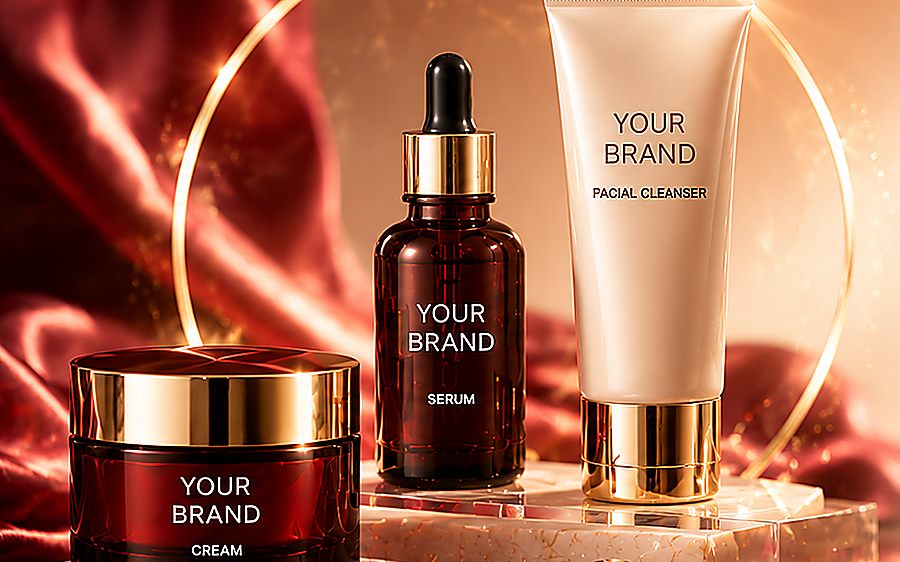
Thailand has become a common choice for brand owners who want to launch skincare, cosmetics, supplements or spa products under their own label. The reasons are practical rather than glamorous: a deep network of formulators and suppliers, broad category coverage and factories used to working with export customers. This guide explains what Thailand offers, where it fits best and how a project usually runs.
What Thailand offers beauty and wellness brands
Thailand's beauty industry has grown around contract manufacturing for local and international brands. For a brand owner, that means a mature ecosystem in one country:
- Formulation depth: labs experienced with creams, serums, cleansers, sun care, hair care, body care, makeup and herbal products.
- Supply network: ingredient distributors, packaging suppliers, printers and box makers within reach of the factories.
- Range of minimums: many factories offer proven base formulas and stock packaging, which helps new brands start with a manageable first order.
- Export experience: partners who regularly prepare documents for buyers in Southeast Asia, the Middle East and beyond.
Categories that suit Thai production
Thai factories cover a wide range, but some categories are especially well established. The table below is a starting point; your partner will confirm what fits your exact brief.
| Category | Why brands produce it in Thailand | What to check |
|---|---|---|
| Skincare (creams, serums, cleansers) | Wide choice of base formulas and actives | Stability with your chosen packaging |
| Sun care | Formats suited to hot, humid climates | SPF testing and filter rules in your market |
| Supplements (sachets, gummies, capsules) | Many food-grade facilities and formats | Food registration and claim rules |
| Herbal and spa products | Local herbal tradition and extracts | Extract specifications and documentation |
| Hair and body care | High-volume filling capability | Packaging minimums for tubes and bottles |
Natural and herbal ingredients
Thailand's herbal heritage gives brands access to distinctive ingredients such as rice, tamarind, turmeric, coconut, butterfly pea and other botanical extracts. These can support a clean-beauty, spa or wellness story that feels authentic. The practical point is documentation: ask for the extract specification, origin and certificate of analysis, because importers in your market may request them. Keep your marketing within the claims your market allows for natural ingredients.
Certifications and Thai FDA registration
Look for factories with GMP and, for cosmetics, ISO 22716; halal-certified lines are available for some products and partner factories. Products sold in Thailand typically need Thai FDA notification or registration before sale, and cosmetics and supplements follow different routes. Our guide to Thai FDA registration explains who holds the registration and what documents are involved. If you sell only outside Thailand, your destination market's rules apply instead, so confirm requirements with the relevant authority or your importer.
Exporting from Thailand
Most export markets ask for a similar core set of documents: an ingredient list in the correct naming convention, certificate of analysis, safety data sheet, and often a certificate of free sale or manufacturing certificate. Some markets add product notification, local labelling or a local responsible person. Requirements change, so plan them early rather than after production. Our article on export documents by market gives an overview.
How Thailand compares with other production countries
Thailand, Korea, Taiwan, Japan and China each have real strengths. Korea is known for fast-moving skincare innovation, Japan for precision and specific textures, China for scale and packaging range, and Thailand for category breadth, herbal ingredients and flexible starting volumes. The right choice depends on your product, target market, positioning and budget. We cover this neutrally in where to manufacture cosmetics.
How a project with a Thai OEM partner usually runs
- Brief: product type, target customer, texture, key ingredients, packaging idea, target markets and target price.
- Quotation: formula route, packaging options, minimums and an indicative schedule.
- Sampling: lab samples and revisions until you approve the formula.
- Packaging and artwork: component selection, compatibility checks, label and box design.
- Registration: notification or registration for each market where required.
- Production and QC: filling, packing, batch testing and release documents.
- Shipping: export documents and handover to your forwarder or importer.
Timelines depend on the product, packaging and registration; your schedule is confirmed in the quotation. Custom formulas and custom packaging take longer than proven formulas with stock components.
Common mistakes to avoid
- Choosing packaging before checking formula compatibility.
- Leaving registration and label rules until after production.
- Comparing quotes that include different scopes.
- Writing marketing claims before confirming what your market allows.
5FINE is based in Bangkok and develops products with certified partner factories in Thailand, Korea, Japan and Dubai, coordinating formula, packaging, registration paperwork and export documents. To see whether Thai production suits your product, start your brand or contact our team with your brief.
FAQ
Is Thailand a good place to manufacture cosmetics for export?
For many categories, yes: Thai factories have broad formulation experience and regularly prepare export documents. Whether it suits you depends on your product, market and positioning.
Do I need Thai FDA registration if I only sell abroad?
Generally, products sold in Thailand need Thai FDA notification, while export-only products follow the rules of the destination market. Confirm the documents your importer needs, such as a certificate of free sale.
What is the minimum order for cosmetics made in Thailand?
It depends on the product and packaging. Minimums start low for proven formulas and stock packaging; your exact MOQ is confirmed in your quotation.
Can I use Thai herbal ingredients in my products?
Yes. Many partner factories work with local botanical extracts. Ask for specifications and certificates of analysis, and keep claims within your market's rules.
This article provides general industry information for planning purposes only. It is not a quotation, offer, guarantee or legal/regulatory advice from 5FINE. Actual MOQs, pricing, timelines and regulatory requirements depend on the product and market, and are confirmed only in a formal quotation.