How to Start a Perfume Brand: Fragrance OEM Guide
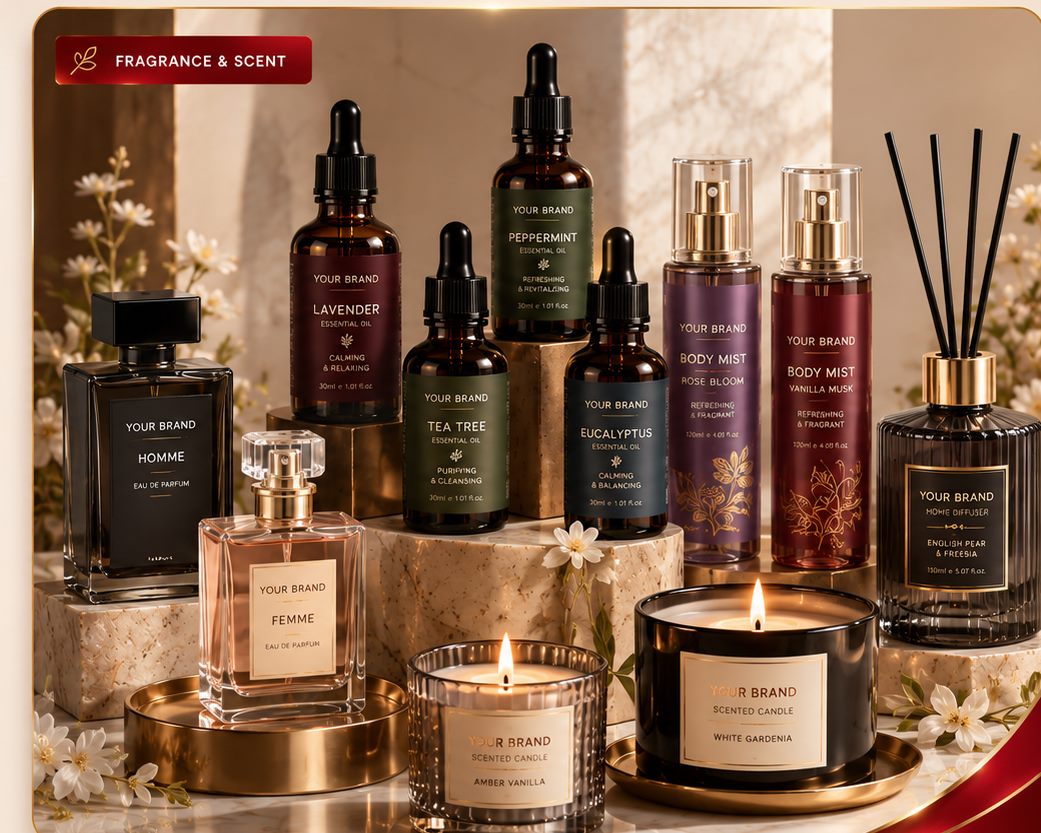
A signature fragrance is one of the most personal products a brand can own, and with a fragrance OEM/ODM partner it is more accessible than many founders expect. The work is less about mixing oils and more about decisions: positioning, scent route, concentration, packaging and compliance. This guide walks through each one so you can brief a partner with confidence.
Decide your fragrance positioning first
Start with who you are selling to and where. A fine-fragrance line for department stores, a body mist range for online impulse buys, perfume oils for Gulf customers and a scent that extends an existing skincare brand are very different projects. Your positioning decides the concentration, bottle quality, box finish and the number of scents you launch with. Many brands start with a small, focused collection and add scents once they see what sells.
Think about sizes at the same stage. A full-size bottle builds perceived value, while travel sprays and discovery sets let customers try several scents at a lower entry point and work well for gifting, sampling at events and online bundles. Each extra size adds packaging components and minimums, so choose the sizes that support your sales channels rather than offering everything at launch.
Ready scent library or custom development
There are two main routes. A ready scent library lets you choose from market-tested fragrances and adjust details such as concentration. It is the faster, simpler path with lower development effort. Custom development means a perfumer creates a fragrance from your brief: mood, notes, references and target customer. It takes more rounds of sampling but gives you a scent that is genuinely yours. A practical brief includes:
- Fragrance family (fresh citrus, floral, woody, amber/oriental, gourmand, oud).
- Two or three reference perfumes and what you like or dislike about each.
- Target customer, climate and occasion.
- Product type (EDP, EDT, body mist, oil, home fragrance) and target retail positioning.
Concentration and format
Concentration shapes the wearing experience, the positioning and the cost. Choose it based on your audience rather than assuming stronger is better.
| Format | What it affects | Cost impact |
|---|---|---|
| Eau de Parfum (EDP) | Richer, longer-lasting wear; premium positioning | Higher |
| Eau de Toilette (EDT) | Lighter wear; everyday positioning | Medium |
| Body mist | Light, refreshing; gifting and impulse purchase | Lower |
| Perfume oil / attar | Alcohol-free; popular in Gulf markets | Medium to higher |
If you want an easy first product, our guide to private label body mist explains why many brands start there.
Bottles, caps, pumps and boxes
In fragrance, packaging carries much of the perceived value. Bottle glass quality, weight, cap material, pump feel and box finish all signal quality before the first spray. Stock bottles with a custom label or decoration keep minimums and tooling lower; custom-moulded glass and heavy caps add a one-time tooling cost and higher component minimums. Check that the pump crimp fits the bottle neck, that the spray pattern feels right and that the box protects the bottle in transit. Our guide to the best packaging for a new perfume brand goes into detail.
Safety, compliance and shipping
Fragrances are generally developed in line with IFRA standards, which limit or restrict certain materials. Ask your partner to confirm IFRA conformity for your concentration and product type. Many markets require allergen labelling above certain levels and a full ingredient list on the box. Alcohol-based perfumes are typically classed as flammable goods for transport, so air and sea shipping follow dangerous-goods rules and need the right documents. Confirm registration, labelling and import rules with your importer or the relevant authority in each target market.
How the development process works
- Brief and quotation: scent route, concentration, packaging direction and minimums.
- Scent sampling: evaluate samples on skin over a full day, not only on a blotter.
- Maceration and stability: the approved fragrance is checked in the final base and packaging.
- Packaging and artwork: bottle, pump, cap, label and box approval.
- Documentation: IFRA certificate, safety data sheet and market-specific paperwork.
- Production and shipping: filling, QC and export under the correct transport rules.
Timelines depend on the product, packaging and registration; your schedule is confirmed in the quotation. Custom scents and custom bottles take longer than library scents with stock glass.
Common mistakes to avoid
- Launching too many scents at once and spreading the budget thin.
- Judging a scent only on a blotter or in the first few minutes.
- Choosing a bottle before checking pump compatibility and box fit.
- Forgetting dangerous-goods requirements when planning shipping.
- Making claims about attraction or mood that your market does not allow.
5FINE supports private-label and custom fragrance development with certified partner factories, coordinating scent, packaging and documents in one project. Explore our fragrance OEM/ODM range, start your fragrance brand or request a quote.
Related: Best packaging for a new perfume brand · Private label home fragrance
FAQ
Can I start a perfume brand without creating a custom scent?
Yes. Many brands launch with scents from a ready library and adjust details such as concentration and packaging, then develop custom scents later.
Should I choose EDP or EDT?
EDP suits premium positioning and longer wear; EDT is lighter and suits everyday use. Choose based on your customer and price positioning.
What is the MOQ for private label perfume?
MOQ depends on the scent route and packaging, and is confirmed in your quotation. Stock bottles usually allow lower minimums than custom-moulded glass.
Is it difficult to ship perfume internationally?
Alcohol-based perfume is generally treated as flammable goods, so it needs the correct documents and an experienced forwarder. Plan this before production.
This article provides general industry information for planning purposes only. It is not a quotation, offer, guarantee or legal/regulatory advice from 5FINE. Actual MOQs, pricing, timelines and regulatory requirements depend on the product and market, and are confirmed only in a formal quotation.