Private Label Supplements in Thailand: A Step-by-Step Guide for New Brands (2026)
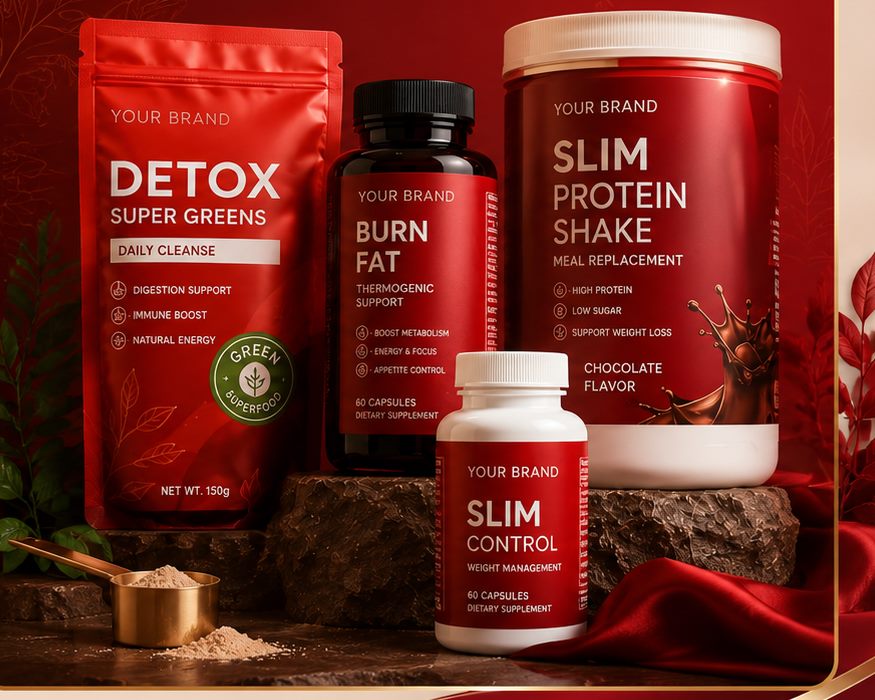
Private label supplements are one of the fastest ways to build a wellness brand: the formulas are proven, the factories are certified, and Thailand has become a go-to hub for collagen, beauty-from-within, fibre and vitamin products shipped across Asia and the Middle East. Here is the step-by-step process we use with 5FINE clients — from product idea to the first container.
What "private label supplements" actually means
A private label (or white label) supplement is an existing, tested formula that a manufacturer already produces, sold under your brand with your packaging. You skip formulation R&D, stability and most safety work because the product is already made — you choose the formula, the format (capsule, sachet powder, gummy, drink shot, effervescent tablet), the packaging and the branding. When you later want a unique formula, the same factory can move you to semi-custom or full ODM development. Thailand's mix of GMP/ISO/HACCP-certified supplement plants, Thai FDA oversight and Halal-ready production is why so many brands start here — see our overview on starting a supplement brand with OEM/ODM.
Step 1 — Choose the category and format that fit your market
Start with demand, not ingredients. The categories that move fastest from Thailand in 2026:
- Collagen & beauty-from-within: collagen peptide powders and drink shots, often with vitamin C, hyaluronic acid, glutathione or astaxanthin. Huge in ASEAN and the GCC. Read the 2026 collagen opportunity.
- Fibre & detox: psyllium / inulin fibre sachets, cleansing and gut-health blends.
- Weight management: fibre, L-carnitine, green tea / garcinia blends — high demand, but check claims rules in your market carefully.
- Vitamins & immunity: vitamin C, D3, zinc, multivitamins; gummies are the growth format.
- Herbal & traditional: turmeric/curcumin, ginger, fingerroot and other Thai botanicals with a credible heritage story.
Format matters as much as formula: sachet powders and drink shots photograph well and suit beauty positioning; capsules are cheapest per serving; gummies carry premium margins but higher MOQs. Browse real private-label mockups in our collagen, fibre and vitamin packaging galleries.
Step 2 — Pick a proven formula (and know what you can change)
Ask your manufacturer for their catalogue of ready formulas with specification sheets: active dose per serving, excipients, allergens, shelf life and existing certifications. With a private label base you can usually change flavour, sweetener, colour, serving size and the packaging format without new stability testing; changing the active dose or adding a new active moves you into semi-custom territory (extra time and a small development fee). Keep your first SKU inside the proven formula — differentiate with branding and positioning.
Step 3 — Confirm MOQ, price and lead time
Typical private label supplement numbers from certified Thai factories in 2026:
| Format | Typical MOQ | Indicative cost / unit (ex-works) | Lead time |
|---|---|---|---|
| Capsules (60 cap bottle) | 1,000–2,000 bottles | US$2.50–6.00 | 6–8 weeks |
| Sachet powder (15 × 10–15 g box) | 1,000–3,000 boxes | US$3.00–8.00 | 6–10 weeks |
| Collagen drink shot (50 ml × 10) | 2,000–3,000 boxes | US$6.00–14.00 | 8–10 weeks |
| Gummies (60 pcs bottle) | 3,000–5,000 bottles | US$3.50–7.00 | 8–12 weeks |
Prices move mainly with the active (marine collagen costs more than bovine; branded actives more than generic) and with packaging. Our MOQ guide explains how packaging minimums set the real MOQ.
Step 4 — Packaging and label design
Supplements are sold on trust, so packaging has to look credible: clear supplement facts panel, dose per serving, batch number, expiry, manufacturer and importer details, warnings, and the certification marks you actually hold (GMP, Halal, Thai FDA notification number). Stock bottles, jars and sachets keep the first run affordable; a printed carton is where you invest in design. Your manufacturer should review the label against the rules of every market you will sell in before printing.
Step 5 — Registration and compliance per market
- Thailand: Thai FDA product notification (your manufacturer files this).
- GCC (UAE, KSA): Halal certification, Arabic labelling, product registration with the local authority (e.g. Dubai Municipality / SFDA) — your importer or a registration agent handles this with documents from the factory.
- Philippines, Vietnam, Indonesia: local FDA/BPOM registration; Thai free-sale certificate and COA are required.
- EU / UK: food supplement notification, novel-food checks, claims under nutrition & health-claim rules.
- US: FDA facility registration, DSHEA-compliant labelling, no disease claims.
Ask for the document pack up front: COA, MSDS, free-sale certificate, GMP certificate, Halal certificate, stability report. A one-stop partner prepares these as part of production.
Step 6 — Sampling, production and export
You will approve a lab sample (taste, texture, dissolution), then a pre-production sample with final packaging. Production runs batching, filling, sealing, coding and finished-goods QC; export documents are issued with the shipment. From brief to finished goods, most private label supplement launches take 6–10 weeks.
Step 7 — Plan the reorder before the first order ships
Your second production run is where margins improve (setup costs are already paid, packaging minimums are met). Order what you can sell in 3–6 months, track sell-through, and reorder with your manufacturer's lead time in mind so you never go out of stock during your first marketing push.
Why brands choose 5FINE for private label supplements
5FINE works with certified partner plants in Thailand on collagen, beauty drinks, fibre, vitamins, gummies and herbal supplements, with packaging design, Halal-ready options and export support coordinated in one place. You own your brand. See our supplement categories or start your brand and our team can share ready-formula options with MOQ and pricing.
Frequently asked questions
How much does it cost to start a private label supplement brand in Thailand?
A single-SKU launch (for example 1,000 bottles of capsules or 1,000–2,000 boxes of collagen sachets) typically lands between US$6,000 and US$15,000 including packaging, basic design and documents. Gummies and drink shots start higher because of format MOQs.
What is the MOQ for private label supplements?
Usually 1,000–3,000 units depending on format; gummies and drink shots are often 3,000+. Packaging components drive most of the minimum.
Can I sell Thai-made supplements in the UAE or Saudi Arabia?
Yes. You will need Halal certification, Arabic labelling and local registration; the factory supplies the certificates and dossiers your importer needs.
Do I need my own formula?
No. Private label uses a proven formula; you can move to a custom formula later once the brand has traction.
How long does it take?
It depends on the format; private label formats are usually the fastest, and custom formulation or custom packaging.
This article provides general industry information for planning purposes only. It is not a quotation, offer, guarantee or legal/regulatory advice from 5FINE. Actual MOQs, pricing, timelines and regulatory requirements depend on the product and market, and are confirmed only in a formal quotation.