Private Label Home Fragrance: Diffusers, Candles & Room Sprays
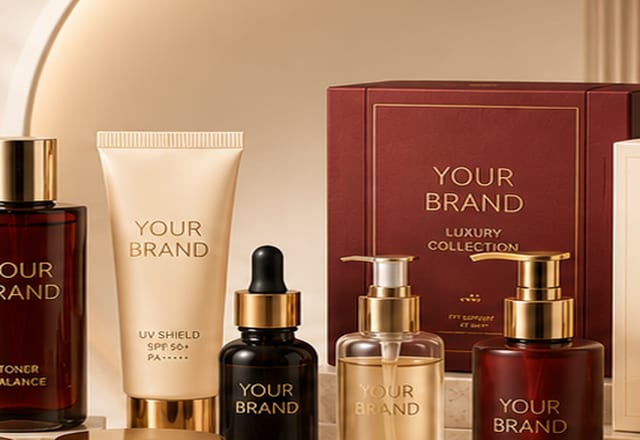
Reed diffusers, scented candles and room sprays sell all year and peak in every gifting season. For lifestyle, interior, spa and hotel brands, a home fragrance line built on one signature scent turns a single purchase into a set. This guide explains how to plan the range, what shapes the quote, what to prepare for UK and EU labelling, and how the work runs with an OEM partner.
Start with one scent story in three formats
The strongest home fragrance lines are not a random collection of products. They are one scent idea expressed in several formats, so a customer who likes the diffuser comes back for the candle and the spray.
- Reed diffuser: the hero gift product. A glass bottle, fibre or rattan reeds and a carton or gift box. It works for many weeks without a flame, which makes it popular for hotels, offices and gifting.
- Scented candle: soy, coconut-soy or other wax blends in a glass, ceramic or tin vessel with a lid. Candles carry the most emotion and the most visual branding.
- Room and linen spray: the most accessible product in the line and a natural entry point for new customers.
Begin with a small scent wardrobe, for example one fresh, one floral and one woody direction, and use the same scents across every format. You can choose from an existing fragrance library for a faster start, or brief a signature scent that belongs only to your brand.
Make the scent work in every format
A fragrance that smells beautiful on a paper strip can behave very differently in wax, in a diffuser base or in a water-based spray. Brief your partner to check each format separately:
- Candles: look at cold throw (how the candle smells unlit) and hot throw (how it fills the room when burning), plus burn quality, wick size and soot.
- Reed diffusers: diffusion depends on the base, the fragrance load and the reed type. Too weak and customers complain; too strong and the bottle empties quickly.
- Room sprays: the spray should evaporate cleanly and not mark fabrics or furniture.
Ask for samples in the final format and test them in a real room over several days of use, not only on a blotter. Also think about your market: deep oud and amber notes are loved in the Gulf, while clean and green directions are common in European interiors. If you plan Gulf sales, our Arabic article on bakhoor and oud home fragrance covers that market.
What drives the cost of a home fragrance line
Price depends far more on your choices than on the product name. Use this table to see which decisions move the quote:
| Option | What it affects | Cost impact |
|---|---|---|
| Library scent vs signature scent | Uniqueness, development work | Lower / higher |
| Fragrance quality and load | Scent strength, labelling | Medium to higher |
| Stock glass vs custom glass | Shelf look, one-time tooling | Lower / higher |
| Wax type and vessel | Burn quality, brand story | Medium |
| Label vs screen print or coating | Premium feel | Lower to higher |
| Folding carton vs rigid gift box | Gift appeal, shipping volume | Lower / higher |
On quantities, minimums start low for library scents and stock packaging; the MOQ depends on the product and packaging and is confirmed in your quotation. Ask for standard, premium and luxury packaging options side by side so you can compare before you commit.
UK and EU compliance: plan labels before artwork
In the UK and EU, home fragrance products are generally treated as chemical mixtures rather than cosmetics, so the classification, labelling and packaging (CLP) rules typically apply. In practice that usually means:
- Hazard information: pictograms, signal words and precautionary statements where the fragrance requires them. This is especially common on reed diffusers because the fragrance is concentrated.
- Safety Data Sheet (SDS): generally expected for the finished mixture, alongside a certificate of analysis from production.
- Candle safety: European candle labelling usually includes standard safety warnings and allergen information.
- Responsibilities: the person placing the product on the market, usually the brand or its importer, carries the legal duties. Decide who that is before the first shipment.
Rules differ by country and change over time, so confirm the final label with your importer or a regulatory consultant. Ask your manufacturer for the label data before artwork is final: reprinting cartons is one of the most common avoidable costs. For other destinations, see the paperwork each market asks for.
Packaging that sells as a gift
- Match glass, lids and cartons across the line so the set looks deliberate on a shelf and in photos.
- A rigid box that holds a diffuser and a candle lifts the value of a gift purchase. Our guide to gift-ready sets explains how to plan bundles.
- Glass and liquid need protection: leak-proof caps, inner seals and inserts, and a drop test if you sell online.
- Check that the bottle and cap materials are compatible with your fragrance oil; some plastics react with concentrated fragrance.
How the process works with an OEM partner
- Brief: scent direction, formats, target markets, retail positioning and channel.
- Scent samples: library options or signature development, tested in each format.
- Packaging selection: vessels, reeds, closures and boxes, with physical samples.
- Compliance check: hazard classification and label information for each market.
- Artwork and pre-production sample: you approve the finished look before the run.
- Production, QC and documents: SDS, certificate of analysis and export paperwork.
Timelines depend on the product, packaging and registration; your schedule is confirmed in the quotation.
Common mistakes to avoid
- Launching too many scents at once instead of proving two or three.
- Finishing artwork before the hazard label information is known.
- Approving a candle from a single test burn.
- Using words such as "non-toxic" or "chemical-free" without substantiation; these claims are often challenged.
5FINE develops private label reed diffusers, candles and room sprays with certified partner factories, including scent development, packaging design and support for SDS, certificate of analysis and label information. Explore our fragrance range or contact our team with your scent ideas and markets.
FAQ
Are reed diffusers and candles regulated as cosmetics?
Generally no. In the UK and EU they are usually treated as chemical mixtures under CLP rules, not as cosmetics. Confirm the exact requirements for each market with your importer.
Can I use the same scent in a diffuser, candle and spray?
Usually yes. The fragrance is adapted to each base, so expect separate testing for each format to make sure it performs and stays stable.
What is the minimum order for a home fragrance line?
Minimums start low for library scents and stock packaging. The MOQ depends on the product and packaging and is confirmed in your quotation.
How long does development take?
Timelines depend on the product, packaging and registration; your schedule is confirmed in the quotation. Signature scents and custom glass generally take longer than library scents and stock packaging.
This article provides general industry information for planning purposes only. It is not a quotation, offer, guarantee or legal/regulatory advice from 5FINE. Actual MOQs, pricing, timelines and regulatory requirements depend on the product and market, and are confirmed only in a formal quotation.