How to Launch a Beauty Brand: A Step-by-Step Plan
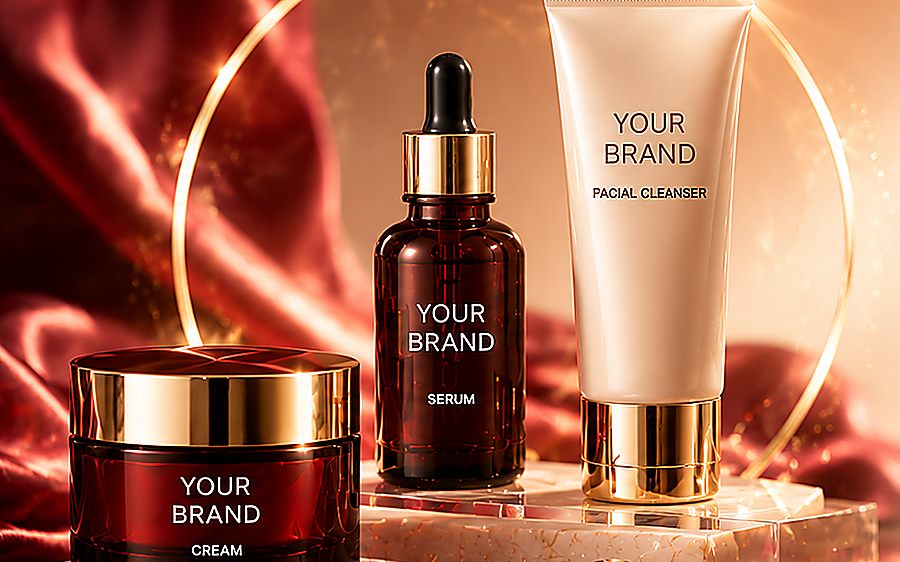
Launching a beauty brand can feel overwhelming because so many decisions depend on each other: the formula affects the packaging, the packaging affects the minimum order, and the target market decides what you can write on the label. Working with an OEM/ODM partner turns this into a structured sequence. Here is the step-by-step plan we follow with founders, from first idea to stock ready to sell.
Step 1: Define your positioning and first market
Start with a short positioning statement: who you serve, the result or experience you offer, and why you are different from what is already on the shelf. Then decide three things that shape everything downstream:
- Category: skincare, makeup, haircare, fragrance, supplements or body care.
- Hero product: the one product your brand will be known for first.
- Target market and retail price: the country and channel you will sell in, and the price you want to reach. This sets the formula tier, packaging level and the registrations you will need.
Step 2: Choose your development route and write a brief
There are three common routes, and the right one depends on your budget, how unique you need the product to be and how soon you want to sell:
- Private label: a proven formula from the manufacturer, sold under your brand. The simplest and usually the lowest-commitment way to start.
- Semi-custom: a proven base adjusted to your brief (scent, colour, active level, texture).
- Full ODM or custom development: a formula developed to your specification. It gives the most differentiation, and custom formulas take longer than proven formulas.
Our comparison of OEM vs ODM vs private label explains the trade-offs in more detail.
Then write a clear product brief. A good brief saves rounds of revisions. Include your target customer, the benefits you want to communicate, preferred texture and scent, key ingredients to include or avoid, packaging ideas, target markets and any Halal, vegan or "free-from" requirements. Reference products you like help a lot. See how to write a product brief your manufacturer can actually use.
Step 3: Sample, test and refine
Request samples early and test them on real users from your target group, not only friends and family. Give structured feedback: what to change, by how much, and what to keep. Expect at least one round of revisions for semi-custom or custom work. At the same time, list the claims you want to make and check with your manufacturer which ones are allowed and supportable in each market. Our guide to cosmetic sampling with an OEM explains what to expect.
Step 4: Select packaging and prepare artwork
Packaging is where shelf appeal and a large part of your cost are decided. Confirm:
- Primary packaging: bottle, jar, tube, airless pump or dropper, checked for compatibility with the final formula.
- Secondary packaging: carton, sleeve or none.
- Decoration: printing, labels, foil, embossing or soft-touch.
In parallel, finalise your logo, label artwork and regulatory text (ingredient list, warnings, net content, batch code area, importer details and local language requirements). A simple brand kit with colours, fonts and tone keeps everything consistent.
Step 5: Handle registration and compliance
Most markets require cosmetics to be notified or registered before sale, and supplements often have stricter rules. Decide who will hold the registration (the brand owner, a local importer or a distributor), gather the documents the authority requires and check that your label matches the registered information. Requirements differ by country, so confirm the current rules with the authority or your importer. Your OEM partner can usually supply the formula and manufacturing documents needed for the file.
Step 6: Confirm the quotation, produce and check quality
Once the sample and packaging are approved, you receive a final quotation covering unit price, MOQ per SKU, packaging, testing and the production schedule. Timelines depend on the product, packaging and registration; your schedule is confirmed in the quotation. Approve a pre-production sample or reference, place your order and agree how quality will be checked: batch records, a Certificate of Analysis and, if you wish, a pre-shipment inspection.
Step 7: Prepare your launch while production runs
Use the production period to get your sales channels ready: storefront or marketplace listings, product photography, launch content, influencer or KOL outreach, and stock logistics (shipping method, import clearance and warehousing). Plan your first reorder point before launch so you do not run out just as demand picks up.
Common launch mistakes to avoid: launching too many SKUs at once, finalising packaging before the formula, skipping the registration check for your target market, and ordering more stock than your channels can realistically sell.
5FINE coordinates formula, packaging, registration support and production with certified partner factories in Thailand, Korea, Japan and Dubai, so founders can follow one plan with one team. See how we work, or start your brand and share your idea.
FAQ
How long does it take to launch a beauty brand?
It depends on the development route, packaging choices and registration in your target market. Proven formulas with stock packaging move faster than custom development. Your schedule is confirmed in the quotation.
How many products should I launch with?
Many brands start with one hero product and one or two supporting items. A small, focused range keeps the first order lean and makes your message easier to communicate.
Do I need my own registration before producing?
Registration rules differ by country. In many markets the product must be notified before it is sold, and the notification holder is the brand owner or local importer. Plan this alongside sampling so it does not hold up your launch.
What do I need to prepare before contacting a manufacturer?
Your positioning, target market, hero product idea, target retail price and any reference products. A rough brief is enough to start; your partner can help refine it.
This article provides general industry information for planning purposes only. It is not a quotation, offer, guarantee or legal/regulatory advice from 5FINE. Actual MOQs, pricing, timelines and regulatory requirements depend on the product and market, and are confirmed only in a formal quotation.