How to Choose the Right OEM/ODM Beauty Manufacturer
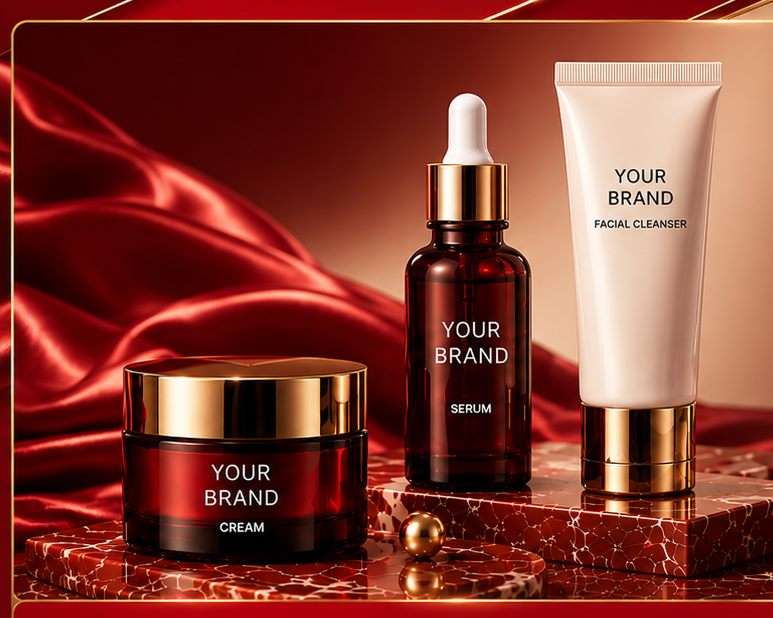
Your manufacturing partner shapes almost everything about your brand: product quality, launch timing, cash flow and how easily you can register and export. Yet many founders choose on the first quote that looks affordable. This guide gives you the questions, documents and warning signs that help you compare OEM/ODM partners on more than price.
Start by knowing which model you need
Before you contact anyone, decide what you are actually buying. With private label you put your brand on a proven, ready formula with limited changes. With ODM the partner develops or adapts a formula to your brief. With OEM you bring your own formula or specification and the factory produces it. Each model changes how much development work is involved, who owns the formula and how flexible minimums can be. If you are unsure, read our comparison of OEM vs ODM vs private label first, then shortlist partners that are strong in the model you need.
Check what the partner covers from end to end
A beauty product is more than a formula. Someone has to source packaging, print labels and boxes, prepare registration files, run stability and compatibility checks and organise export documents. Ask each candidate to map the journey and say clearly which steps they handle, which they coordinate with other suppliers and which stay with you. Useful questions:
- Who sources and approves primary packaging, and who checks that it is compatible with the formula?
- Who prepares the product information needed for registration in your target market?
- Who supplies documents such as the certificate of analysis, safety data sheet and ingredient list?
- Who is your single point of contact when something changes?
The more steps you coordinate yourself, the more time and risk you carry. That is fine if you have the team for it; just make the choice deliberately.
Verify certificates for the facility that will make your product
GMP is the baseline for cosmetics and supplements. Depending on your category and market, you may also look for ISO 22716, halal certification or specific food-safety standards. Ask for current certificates and check three things: the company name and address match the facility producing your product, the scope covers your category, and the certificate is still valid. A certificate for a different site or product type does not help you. Our guide to cosmetic certifications explains what each standard covers.
Understand MOQ and what drives the cost
Minimum order quantity affects your cash flow more than almost anything else. Ask for minimums per product and per packaging component, because bottles, tubes and printed boxes often carry their own minimums that are higher than the formula's. Proven formulas and stock packaging usually allow lower starting volumes; custom formulas and custom packaging raise them. See understanding MOQ for how to plan your first order.
| Option | What it affects | Cost impact |
|---|---|---|
| Ready formula, stock packaging | Development work, minimums | Lower |
| Adapted formula (new scent, texture or active) | Sampling rounds, testing | Medium |
| Fully custom formula | R&D, stability testing, timeline | Higher |
| Custom mould or decorated packaging | One-time tooling, packaging minimums | Higher |
When comparing quotes, make sure they include the same things: formula, packaging, filling, labelling, testing and documents. A low quote that leaves out packaging or testing is not a cheaper project.
Test the sampling and revision process
Sampling is where projects either build momentum or quietly stall. Ask how many revision rounds are included, what information the lab needs from you for each round and how feedback is recorded. A good partner asks clarifying questions before the first sample instead of guessing. Our article on sampling with an OEM explains what a healthy process looks like.
Clarify formula ownership and confidentiality
With a ready private-label formula, the formula normally stays with the manufacturer. With custom development, ownership depends on the agreement. Ask directly: can you receive the full formula, or only the ingredient list? Can you move production elsewhere later? Is your brief and artwork covered by a confidentiality agreement? Get the answers in writing before development starts.
Red flags to watch for
- Promises of guaranteed results, fixed launch dates before the brief is final, or claims that registration "will not be needed".
- Certificates that cannot be shown, are out of date or belong to a different facility.
- Reluctance to put minimums, inclusions and responsibilities in a written quotation.
- Pressure to pay a deposit before your brief and specification are agreed.
- Suggestions to use medical or weight-loss claims on cosmetics or supplements.
A shortlist checklist you can send to every candidate
- Which model (OEM, ODM, private label) do you recommend for my brief, and why?
- Which steps do you handle, and which do I manage?
- Please share current certificates for the facility that will produce my product.
- What are the minimums for the formula and for each packaging component?
- How many sample revisions are included, and what do you need from me for each one?
- Who owns the formula, and what documents will I receive?
- Which registration and export documents can you support for my target markets?
Compare the answers side by side. Clear, specific replies are usually a better predictor of a smooth project than the lowest number on a quote.
5FINE is a Bangkok-based OEM/ODM development partner that works with certified partner factories in Thailand, Korea, Japan and Dubai, and coordinates formula, packaging, registration paperwork and export documents in one project. You can see the steps on our how we work page, or send us your brief and we will tell you which route fits your product.
FAQ
What is the difference between an OEM and an ODM manufacturer?
An OEM produces to your own formula or specification, while an ODM develops or adapts the formula for you. Many partners offer both, so ask which model they recommend for your brief.
Which certificates should a beauty manufacturer have?
GMP is the baseline. Depending on your market and category, ISO 22716, halal or food-safety certificates may also matter. Check that each certificate covers the facility and category that will make your product.
How many manufacturers should I compare?
Two to four serious candidates is usually enough. Send all of them the same brief so you can compare scope, minimums and inclusions fairly.
Do I own the formula if I work with an ODM?
It depends on the agreement. Ready private-label formulas usually stay with the manufacturer; custom formulas can be transferred if agreed. Confirm ownership in writing before development starts.
This article provides general industry information for planning purposes only. It is not a quotation, offer, guarantee or legal/regulatory advice from 5FINE. Actual MOQs, pricing, timelines and regulatory requirements depend on the product and market, and are confirmed only in a formal quotation.